A wild man at the bottom of the pond
There's an old story the Brothers Grimm published over 200 years ago in an earlier form. The fuller version, Iron Hans — often called Iron John in English — appeared in 1850. Most men have never heard of it. They should have.
It goes like this.
A king's hunters keep vanishing in a forest. Nobody knows why. Then one brave man walks in with his dog and finds a dark pond. A giant arm reaches up and drags the dog under. So the man comes back with others, and they empty the pond bucket by bucket.
At the bottom lies a wild man. Rust-coloured skin. Hair down to his knees. They call him Iron John.
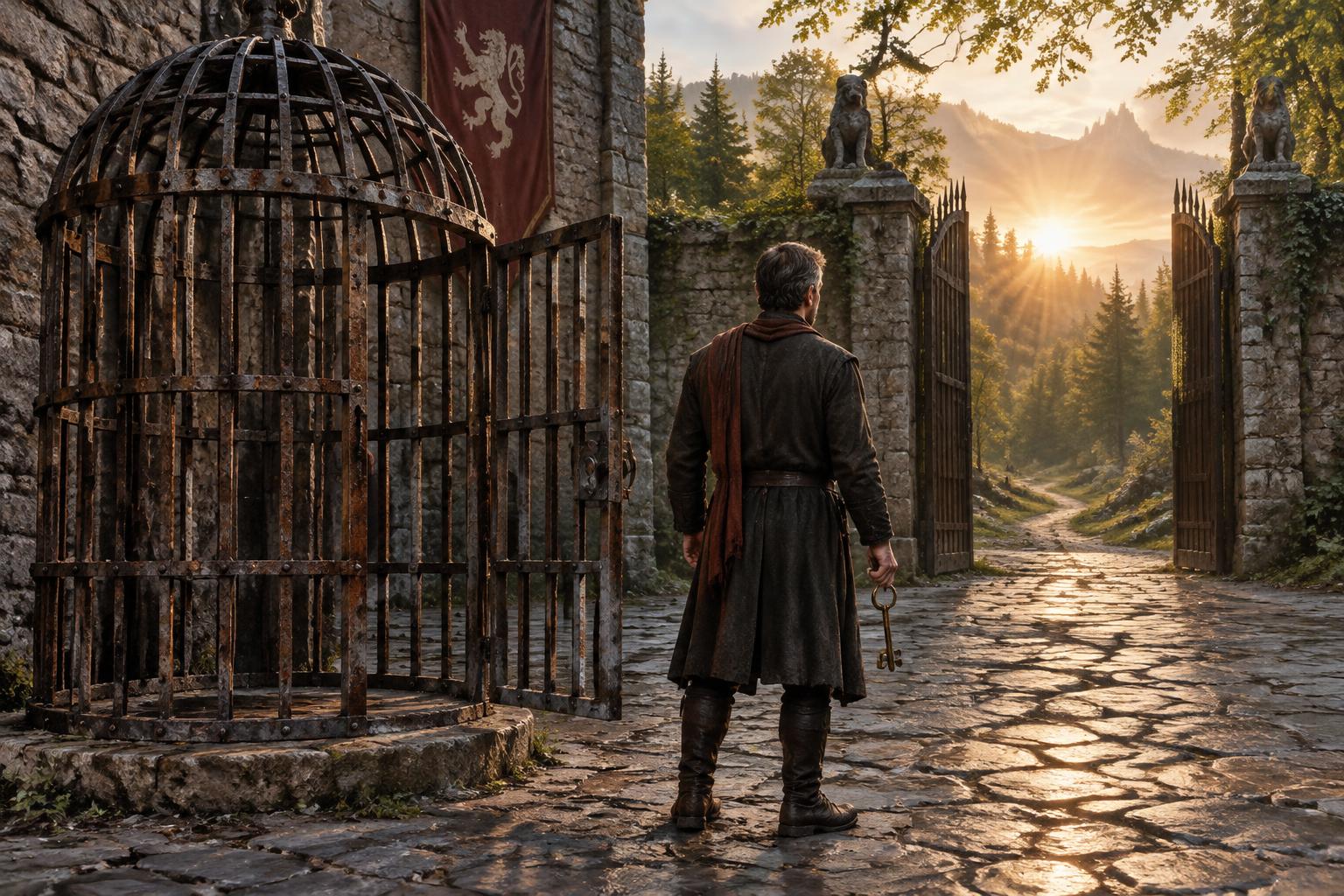
They drag him back to the castle and lock him in an iron cage in the courtyard. The king makes it law: anyone who frees him dies.
One day the king's young son is playing with his golden ball. It rolls into the cage. The wild man says he'll give it back, but only if the boy opens the door.
The key is hidden under his mother's pillow.
The boy steals it. He opens the cage. Then, terrified of what he's done, he climbs onto the wild man's shoulders and leaves with him into the forest.
That's where his real life begins.
Steal the key
Look at where the key was hidden. Not in the king's vault. Under the mother's pillow.
That's not an attack on mothers. It's about comfort. Safety. The soft place where a boy is protected and never tested.
That's how I read it. A fairy tale is a mirror, not a diagnosis of every family.
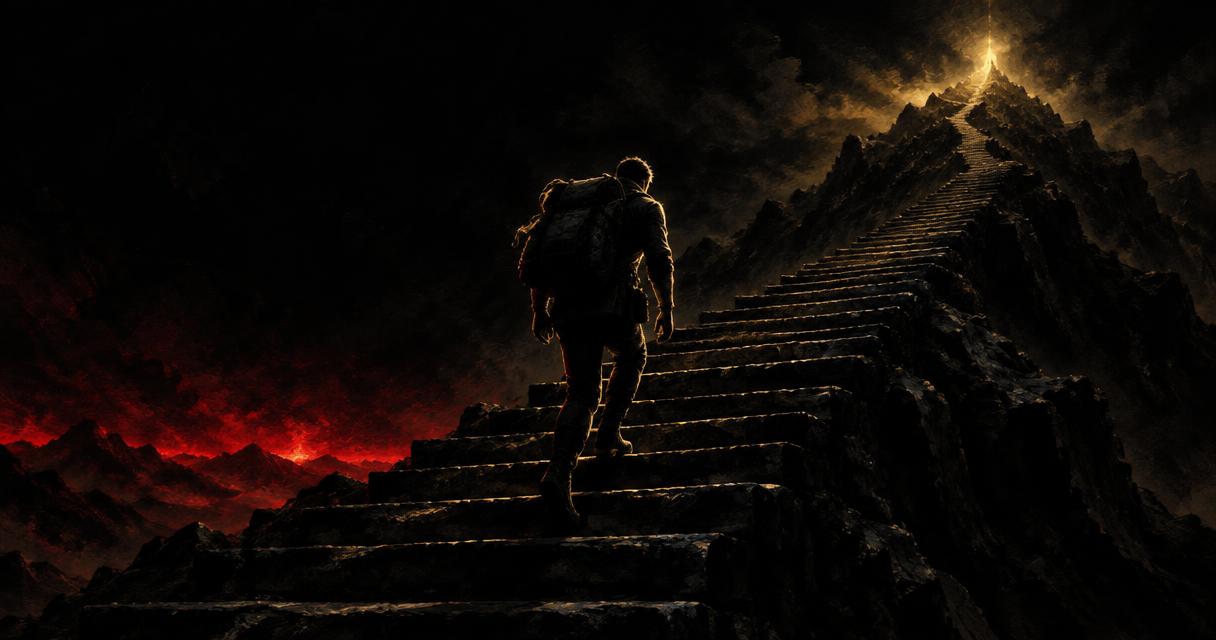
Every man has to take that key at some point. Nobody hands it to you. Nobody gives you permission to grow up. You take it, you open the cage, and you walk into the forest scared out of your mind.
How many men are still waiting for permission? Waiting for the right time. The right job. The right feeling. Thirty, forty, fifty years old and still sleeping on the pillow.
In the forest, Iron John gives the boy one job. Guard the golden spring. Don't let anything fall in.
He fails. His finger slips in and comes out gold. Next day, a strand of hair. Third day, his hair falls into the water as he bends over his reflection. Gold.
Iron John sends him away. He's failed the test. But he hasn't lost his mentor: Iron John tells him he can call for help when he needs it.
Now flip it over.
That failure is the very thing that marks him. The gold he can't hide is his gift. And what does he do with it? He hides it under a cap and goes to work in a stranger's kitchen. Then as a gardener's boy. Dirty hands. No title. No one knows who he is.
Most men think their failures disqualify them. The story says the opposite. Your wound is where your gold is. But you don't get to wear it until you've done the humble work first.
That doesn't mean suffering is a gift you should be grateful for. It means what hurt you need not have the final word on what you become.
Every boy needs a wild man
Here's what most people miss. The boy doesn't go into the forest alone. He goes on the wild man's shoulders.
Iron John isn't just a frightening figure. In this reading, he's a mentor. He's raw, rough, a bit frightening. But he knows the forest. He's been where the boy needs to go.
And that's what's missing for so many men today.
Fathers working all hours, or not there at all. Grandads in care homes. Uncles on the other side of the world. For some boys, the old men who used to take them aside and show them how it's done have gone quiet. In their place? Algorithms. Influencers selling anger. Screens full of men who've never built anything telling young lads who to hate.
A boy without an older man to guide him doesn't stop needing guidance. He may just find a worse source of it.
That doesn't erase the work of mothers, partners or other good mentors. It names the value of a responsible man showing another man what strength can look like.
The wild energy in a young man isn't the problem. Drive. Aggression. Hunger. Restlessness. That's fuel. Without a guide it can burn the house down. With one, it can build the house.
Aggression here means energy to direct, not permission to threaten or hurt anyone. A mentor teaches restraint as well as courage.
That's the whole point of Iron John as I read him. Wildness isn't something to cage forever, and it isn't something to unleash on the world. It's something to be mentored.
So ask yourself two questions.
Who is your Iron John? Who's the older man, living or in the pages of a book, who has walked the forest ahead of you? If you don't have one, go and find one. Pride will tell you that you can work it all out alone. Pride is a liar.
Choose carefully. A good mentor welcomes questions, respects your boundaries and helps you become more independent. He doesn't demand obedience or isolate you from people who care about you.
And second. Whose Iron John are you? Because if you've lived a bit, failed a bit, and got back up, there's a young man somewhere who needs exactly what you know. Your scars are someone else's map.
Win the war. Walk away.
War comes to the kingdom. The gardener's boy asks for a horse. They give him a lame one and laugh.
He rides to the edge of the forest and calls for Iron John. Out comes a war horse, armour, and an army of iron men. He rides into battle, turns it, wins it.
Then he disappears. Back to the garden. Cap on. No speech. No credit.
Read that again in 2026. A man who wins and doesn't post about it.
We live in a world that tells men strength is something you show off. The car. The physique. The bank balance. The noise. The story says real strength works quietly. It turns up when it's needed, does the job, and goes back to the work.
Only later, after a three-day festival where he catches the princess's golden apples, is his identity finally revealed. He marries the princess. And at the wedding, Iron John walks in, no longer wild, but a king. He tells the young man that he has broken his enchantment.
The tale doesn't spell out precisely how the spell was broken. I read that ending as a picture of what faithful mentorship can give back to both men.
The mentor freed the boy. In the end, the boy freed the mentor.
That's how it can work. When you guide a younger man well, you don't lose anything. You get set free too.
The cage is open
So here's the challenge.
Find the key you've been too comfortable to take. Walk into the forest you've been avoiding. Stop hiding your gold because it came from a wound. Find a man who's been further than you and learn from him. Then turn round and offer your hand to the one coming up behind.
Waiting in the castle won't open the cage. Conquerors take the key.
Asking for help isn't waiting to be rescued. It's choosing how to move.
The cage is open. Go.
A free coaching session with me
If this landed because you know exactly what your cage looks like, let's have a real conversation. Not with an algorithm. With me, Mark Weeks.
Bring the thing you've been avoiding. We'll look at where you're stuck and a practical next step you can take responsibility for.
I'm offering a free coaching session. There are three spaces left. Use the enquiry button below to email me; I'll confirm availability and arrange the next step. Sending an enquiry doesn't reserve a space.
Coaching supports reflection and action. It isn't therapy or a substitute for professional mental-health care.
Story source: The Brothers Grimm's Iron Hans, translated by D. L. Ashliman. An earlier Wild Man version appeared in 1815; Iron Hans was added in 1850. The mentorship reading here is my interpretation, not a claim about the Grimms' stated moral.